

When you’re building a platform, you’re not just developing for customers. You’re developing for yourself first. This changes everything about how you prioritize.
Persistence management is one of those features that quietly sinks to the bottom of the backlog. We all want it. We all know we need it. But the priority stays low, pushed aside by urgent customer requests and deadlines. “One day, when we have time, we’ll implement it properly.” There’s a good chance that day never comes.
So we decided to stop waiting.
The Solution: A Dedicated KV Service
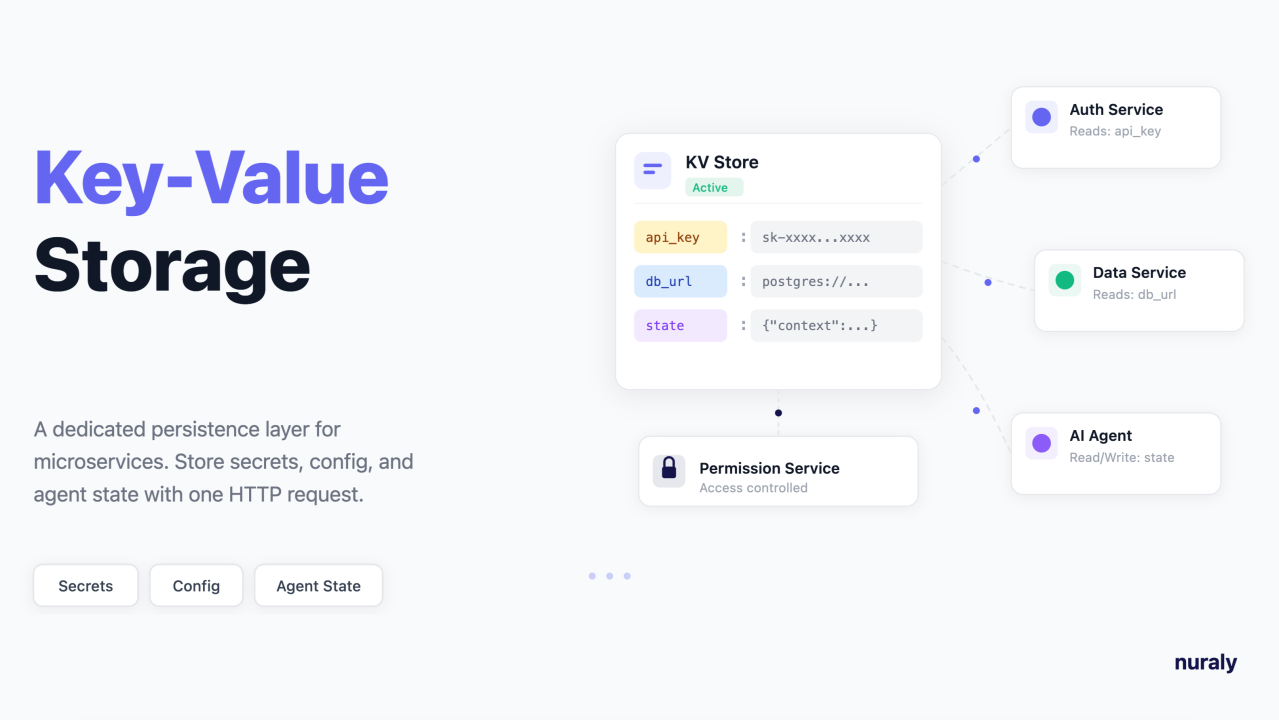
At Nuraly, we built a separate service, a simple key-value store that serves our other microservices. It can hold encrypted values when needed, and it runs independently from everything else.
What can you store? More than you’d expect:
- API keys and secrets
- Database connection strings
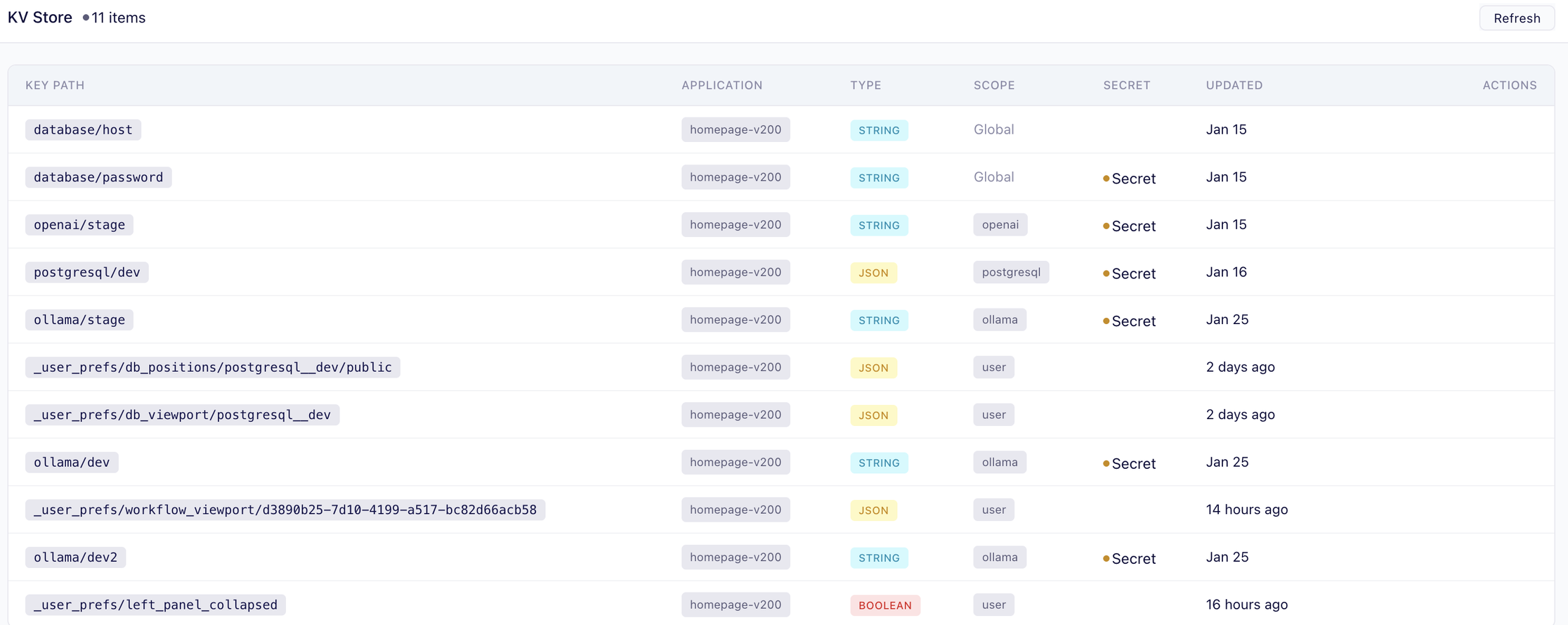
- User-specific settings per service
- Feature flags and configuration overrides
- Agent state
That last one surprised us too. We now use the KV service to hold the state of our AI agents, their context, progress, and memory between sessions. What started as a configuration store became the backbone of our agent persistence.
All of this sits behind a dedicated permission service, so access stays controlled and auditable.
Why This Works
The beauty of a standalone KV service is isolation and simplicity. You don’t need to manage persistence inside each microservice anymore. No more duplicating the same storage logic across services. No more spinning up separate databases just to hold configuration for each one.
Instead, the feature is one HTTP request away.
Each microservice pulls only what it needs, nothing more. No hardcoded values buried in deployment scripts. No redundant persistence layers bloating every service. Just a clean API call.
It’s a small architectural decision, but it compounds. Onboarding new microservices becomes faster. Rotating credentials becomes trivial. Debugging configuration issues becomes possible. And every new service you spin up inherits the same persistence capability without implementing storage logic from scratch.
Where This Leads
I’ve started thinking of persistence not as a feature to implement later, but as infrastructure to build early. The cost of doing it right upfront is low. The cost of doing it wrong, or not at all, accumulates invisibly until it doesn’t.
If you’re building a platform, don’t let persistence sink in your backlog. Build the KV layer now. Your future self will thank you.